Leak Sources
Water at a ceiling can travel from a distant seam or come from equipment. Inspection connects the symptom with its entry route before roofing work is selected.
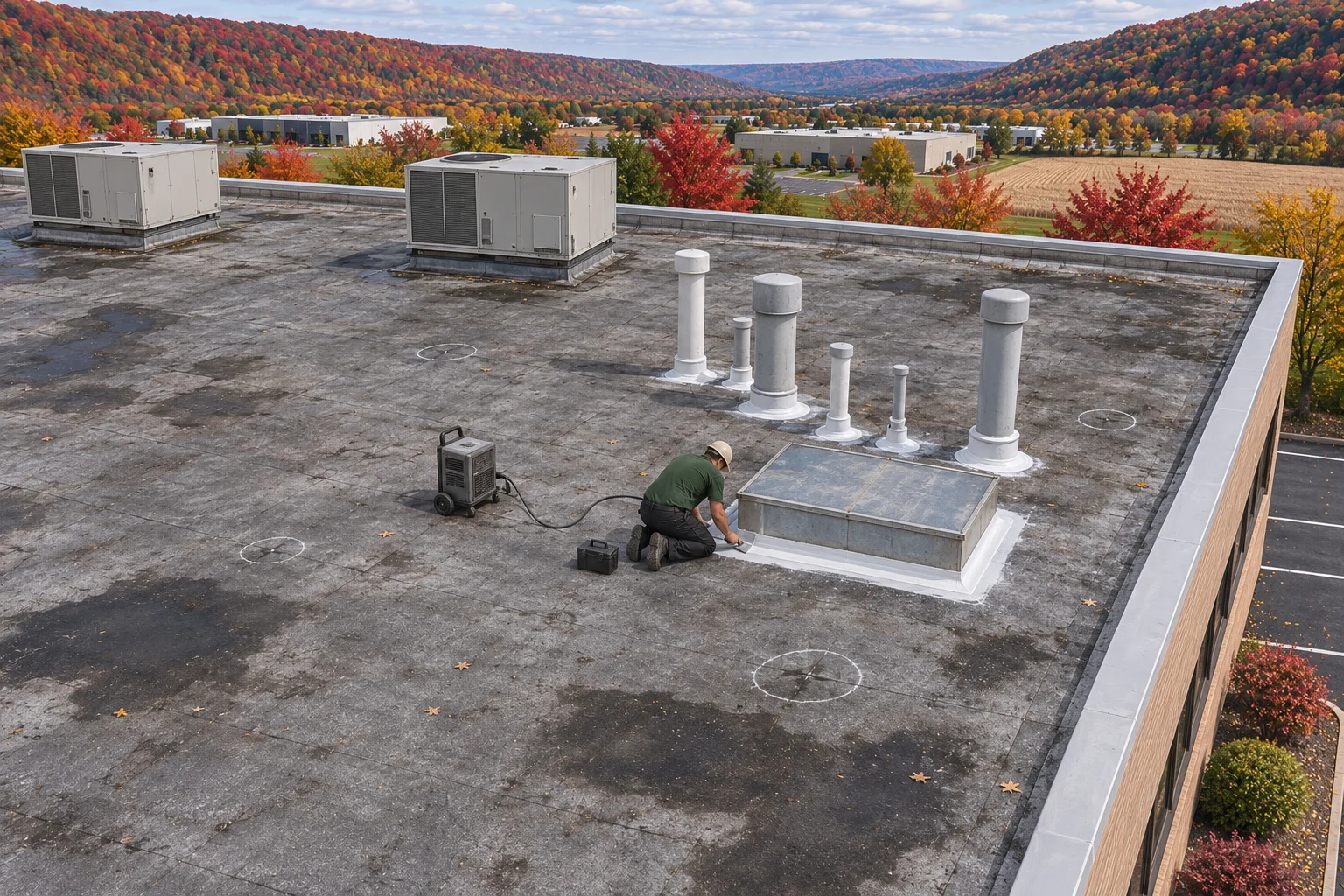
Commercial roof repair questions in Wilkes-Barre cover membrane defects, metal connections, industrial equipment and the conditions that determine repair scope.
These commercial roof repair questions in Wilkes-Barre address the roof conditions that building owners and facility managers encounter. The answers explain inspection, material condition and the connections repaired.
Water at a ceiling can travel from a distant seam or come from equipment. Inspection connects the symptom with its entry route before roofing work is selected.
The roof material surrounding an opening must receive the new connection. Damaged insulation or weakened metal can change the area that needs removal.
Describe the leaking connection or affected interior area so we can discuss inspection and repair.
(272) 271-4237
Call UsA Wilkes-Barre facility should protect occupants and contents, restrict the affected area and document where water appears. We review timing and nearby equipment activity before arranging roof investigation under safe conditions. Temporary containment can help control exposure, but the permanent work still needs an identified entry route and an assessment of damaged roofing materials.
An on-roof inspection sets the price after we evaluate the leak and affected assembly. Cost drivers include tracing, roof system, damaged area sizes and number, wet insulation found through core cuts, flashing, drain work and access.
The scope also needs to explain whether repair or replacement of a section is the sound response to those findings.
Interior reports help connect a distribution center’s leak timing and locations with possible roof entry routes. We compare them with seams, drains and equipment rather than assume water fell directly beneath an opening. Investigating that route and any concealed wet material allows the repair boundary to follow evidence instead of the ceiling stain alone.
Repeated leaks suggest a broader assessment when failures or wet materials extend beyond isolated repairable areas. We examine the condition of the surrounding assembly before comparing further repairs with replacement. Remaining usefulness depends on panels or membrane, insulation, supports and maintenance, so the next step should not be decided only by the latest visible drip.
An icy surface is unsuitable for proceeding without assessing safe access and the selected repair system’s preparation requirements. We check dryness and conditions needed for bonding or curing before opening the roof. Temporary protection may be necessary until permanent work is feasible, with the remaining scope identified rather than assumed complete.
Heavy rain can expose restricted runoff or defective connections beside a drain as water accumulates. We inspect the outlet, surrounding membrane and nearby flashing before choosing a repair. The fault may involve the drain assembly or another entry route, so the interior wet area needs to be connected to the roof findings.
Patch material should not be assumed to correct the reason a low roof area holds water. We examine drain elevation, insulation shape, debris and possible deck movement before defining the work. Damaged roofing may need repair, but drainage geometry can require a separate correction beneath or around the visible surface.
The surrounding membrane and underlying materials determine whether a defect can accept a suitable patch. We establish moisture extent and find a reliable connection boundary before choosing the method. Wet insulation or deteriorated support can require replacing a section even where the opening itself appears small from the roof surface.
Hail repairs should follow functional damage rather than assume every dent is an entry point. We inspect punctures, laps, flashing and attachment and compare those findings with reported leakage. Sound dented areas may need a different response from split metal or displaced details, while any coverage decision depends on the insurer and policy.
Leaks can return where a sealed fastener still lacks suitable grip or moves in an enlarged hole. We inspect the washer, surrounding panel and support, along with adjoining laps. The repair needs a sound attachment and compatible seal, rather than another surface layer that leaves the mechanical problem unresolved beneath it.
Damaged screw holes need a repair selected from the condition of the panel and underlying support. We check whether an appropriate fixing can restore attachment or whether the affected metal needs different treatment. The weatherproof connection should follow that decision instead of relying on sealant to hold or stabilize an unsuitable fastener.
Corrosion requires replacement consideration when metal loss, perforation or weak attachment prevents a reliable local repair. We inspect laps and accessible undersides to determine how far deterioration extends. A replacement panel must connect to serviceable adjoining components, so the scope may need to address more than the most visibly rusted area.
Ice-backed water can reach vulnerable details differently from ordinary rainfall when gutters or outlets are obstructed. We trace snowmelt paths and check for freeze-thaw effects after access is safe. Heavy wet snow also calls for qualified consideration of structural loading, beyond the local work needed to repair a water-entry connection.
Occasional storm leakage still warrants investigation because water is entering the building through a defect or drainage-related weakness. We compare rainfall conditions with roof seams, outlets and wall details. A dry ceiling during other weather does not establish that the assembly remains sound when runoff increases or wind drives rain toward a vulnerable connection.
Several wet aisles require mapping the interior evidence against roof features rather than assuming separate openings over each drip. We inspect seams, drainage and equipment while considering water travel through the assembly. Suitable testing or selective investigation may be needed to establish the source and the extent of affected materials before repairs are defined.
Leakage near a unit can come from condensate or equipment components as well as the roof flashing. We compare water entry with operation and rainfall and inspect curbs and service penetrations. Coordinating the mechanical investigation helps ensure roofing repairs address a confirmed defect instead of an unrelated water source inside the equipment.
An industrial drain repair should first establish whether the fault involves roofing attachment, the outlet or piping below. We examine wet materials nearby and assess access over the operation beneath. That diagnosis determines the roofing and plumbing coordination needed before opening a connection above machinery or other areas requiring protection.
Leaks above plant equipment need protection of the operation below and a traced water-entry path before permanent work is chosen. We assess roof penetrations, drainage and moisture extent alongside access restrictions. The sequence should identify openings or isolation needed during repair, rather than assume the production area can remain unrestricted throughout.
An exhaust fan may need servicing where vibration, discharge or equipment condition contributes to repeated roof-detail damage. We inspect the curb and contaminated materials while coordinating those mechanical concerns. Repairing the membrane alone can leave the same stress or exposure acting on the new connection after the roofing work is completed.
Maintenance should monitor repaired connections and adjacent roofing for new traffic damage, blocked drainage or equipment-related movement. We compare later observations with the repair record to identify what has changed. A local repair remains part of the larger assembly, so upkeep should not focus solely on the patched surface while surrounding defects develop.
Payment responsibility depends on the actual lease terms, including how maintenance and repair duties are assigned. We can document the physical defect and proposed work for the owner and tenant to review. Notice and authorization arrangements should be checked rather than inferred from ownership, occupancy or which party first reported the leak.
Humidity can cause condensation that resembles roof leakage inside a brick commercial building. We compare dampness with rain, ventilation and operating conditions before assigning a roof repair. Wall joints and flashing also need examination, because water entering through masonry or forming inside the assembly will not be resolved by an unrelated membrane patch.
An inspection should record earlier repair locations, materials and visible condition alongside current leak evidence. We examine whether patches conceal moisture or continuing movement and compare the findings with available history. That information helps explain whether the next scope addresses the same failure, extends its boundary or responds to a separate defect.
A repair recommendation does not determine insurance coverage; the policy and cause of damage govern that response. We document the roof findings and necessary work so the owner can discuss them with the insurer. Storm effects and existing deterioration should be distinguished where possible without promising reimbursement or assuming all observed damage is covered.
Repair plans should distinguish investigated damage from conditions still hidden beneath the Wilkes-Barre roof covering. We explain how those uncertainties could affect removal boundaries rather than present them as confirmed findings. Pennsylvania’s statewide code is the UCC; the reviewing authority should receive the scope and its unresolved items before project-specific requirements are assumed.
Water can travel within a Kingston distribution building’s roof before reaching the reported interior location. We compare seams, drains and equipment with the leak map to identify a likely route. The repair should address both the source and affected material, rather than stop at the place directly above the wet ceiling.
A Nanticoke seam repair should not rely on adjoining metal that cannot support a suitable connection. We inspect corrosion and attachment beyond the leak to establish where sound material begins.
The repair may therefore extend farther than the visible opening, allowing the rebuilt seam to connect properly instead of leaving a weak boundary beside the new work.
A Pittston drain leak may require work beneath the deck if the outlet or piping is responsible. We inspect the roofing connection and accessible underside before defining the trade responsibilities. The scope should correct the identified component rather than repeatedly replace surface material while a separate plumbing fault continues below it.
A Taylor facility should coordinate roofing and equipment work where discharge, vibration or access affects the leaking detail. We inspect the curb and surrounding materials before planning preparation and repair. Any required isolation needs to be agreed with the operator so the new connection is not immediately exposed to an unresolved mechanical problem.
Leak timing, locations and equipment activity help diagnose renewed water entry at a Hellertown property. We compare those records with earlier repair photographs and the current roof condition. The investigation should determine whether the original route remains active or another defect now sends water toward the same interior area.
An inspection applies these repair considerations to the actual seams, panels and flashing on your building.