Wilkes-Barre Commercial Roof Repair
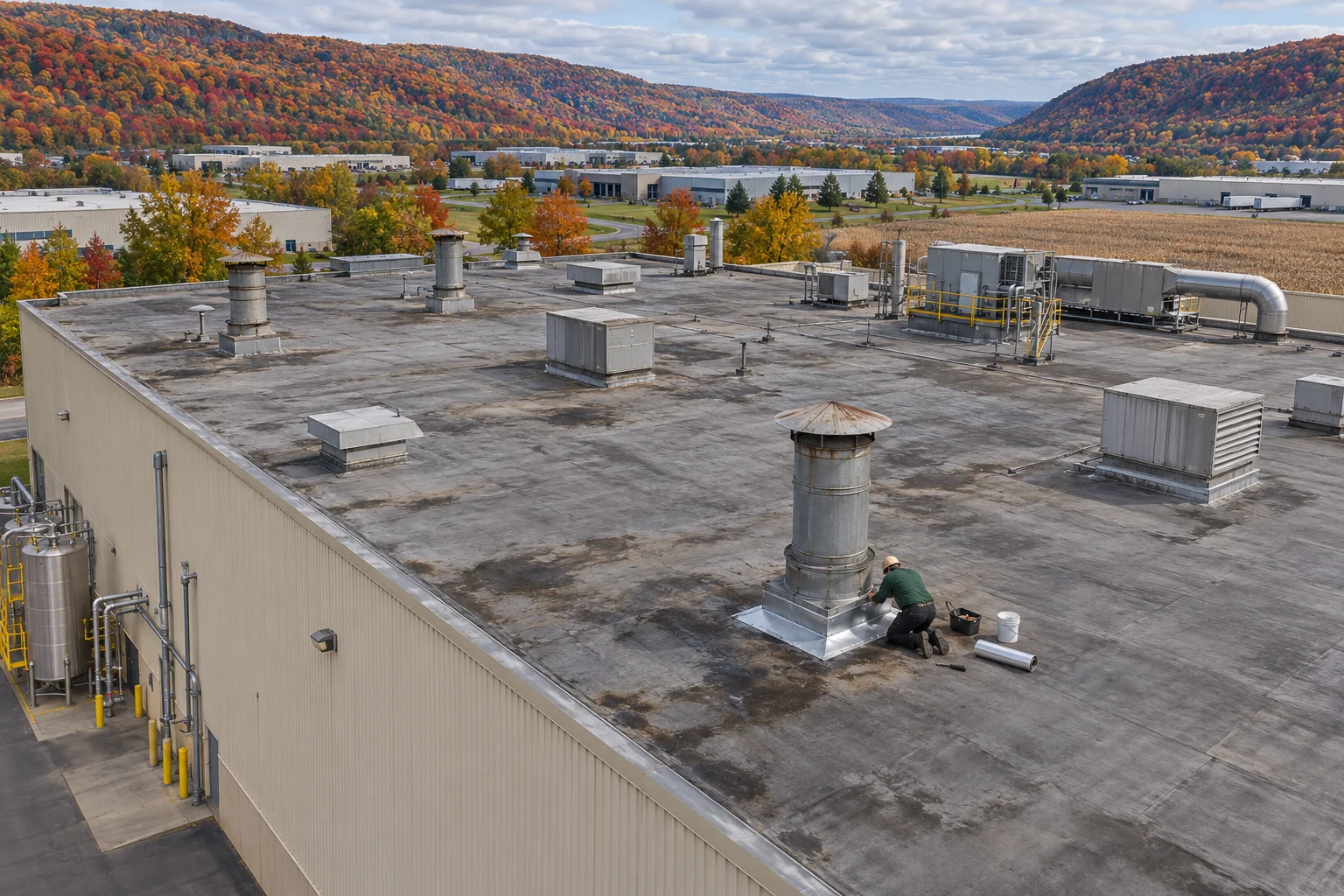
Flashing work around industrial rooftop equipment

Taylor Commercial Roof Repair Contractor

Repair Flashing Around Fans and Service Penetrations

Taylor commercial roof repair rebuilds leaking roof details around equipment and repairs damaged membrane or metal connections after checking the conditions causing the failure.

Flat Roofs Metal Panels Industrial Roofs

Taylor Commercial Roof Repair Work

Taylor commercial roof repair connects flashing work with the condition of adjoining fans, curbs and service penetrations. We identify equipment concerns before repairing the damaged roofing transition.

Fan Curb Repairs

A fan curb joins the roof covering to equipment that can move or discharge onto nearby material. We inspect the flashing and adjoining membrane before selecting the repair. Mechanical servicing needs are identified so the renewed roof connection is installed after the relevant equipment condition is addressed.

Service Penetrations

Pipes and ducts create changes in the roof surface where corners and terminations need careful preparation. We repair the damaged transition to match the existing covering. The inspection includes how maintenance workers reach the equipment so later access can avoid unnecessary traffic across vulnerable edges.

Damaged Roof Covering

Cuts, open seams and affected insulation near equipment are examined as part of the surrounding roof area. We establish the repair boundary from the material condition. The new patch or replacement section connects to prepared, serviceable roofing beyond the immediate point where water enters.

Metal and Wall Connections

Leaks at metal laps or wall flashing need their own diagnosis even when equipment is nearby. We inspect attachment, seal condition and adjoining components before repair. The work follows the identified entry point while separate wall or mechanical faults are addressed by the appropriate trade.

Commercial Roof Repair Conditions in Taylor

Roof Repairs Around Exhaust Equipment

Exhaust discharge and equipment movement can affect the roof detail around a fan. We inspect the curb, contaminated materials and adjoining membrane before rebuilding the connection. Required isolation or servicing is discussed with the operator so the repair sequence accounts for the equipment's actual condition.

Leaking Equipment Curb Flashing

Water at a curb corner can enter through the membrane transition or come from equipment above it. We compare rainfall and operating patterns while examining the flashing. The roofing repair addresses a confirmed damaged connection, with mechanical water sources identified separately before the detail is closed.

Maintenance Traffic Damage

Tools and foot traffic near service points can leave punctures or worn roof covering. We inspect the damaged material and affected layers before patching or replacing the area. A clear equipment access route helps avoid placing later traffic directly over repaired seams or flashing edges.

Repeated Splits at Penetrations

A repaired detail that splits again calls for examination of attachment and continuing movement. We inspect both the roof connection and the component passing through it. The next repair should account for the condition driving the failure, alongside the material required to rebuild the weatherproof transition.

Benefits of Commercial Roof Repair in Taylor

Coordinate the Connected Systems

Examining equipment and roofing together helps establish the sequence of repairs at their shared connection. Mechanical work affecting the curb or penetration is identified before the roof detail is renewed. This keeps the roofing scope aligned with the component it must remain connected to during operation.

Rebuild Complete Curb Corners

A curb repair includes the changes in direction and terminations around the damaged area. We prepare adjoining membrane and attachment before installing the new flashing. The finished connection follows the curb geometry so a repaired face is supported by complete edges around it.

Address Nearby Roof Damage

Inspection of the surrounding covering can identify punctures, worn areas and moisture beyond the curb itself. Those findings help define a repair boundary that includes affected roofing layers. The work then reconnects to serviceable material outside the equipment detail rather than stopping at its visible edge.

Protect Future Service Access

Discussing maintenance routes helps locate the repair in relation to later equipment visits. The operator can identify where tools and personnel need to travel after the work is complete. That practical access plan supports the repaired connection while keeping the roof's other service points reachable.

Roof Flashing Fails Beside Operating Equipment

We can inspect the curb and discuss the servicing or isolation needed before roofing work begins.

(272) 271-4237

Call Us

Our Commercial Roof Repair Process in Taylor

1

Inspect the Equipment Transition

Review the leak timing and examine the curb, penetration and surrounding roof covering. We compare water appearance with rainfall and equipment operation. The findings establish whether the roofing connection has failed and identify mechanical conditions that need attention before the repair begins.

2

Arrange Isolation and Access

Discuss any equipment shutdown, protection below the work or access restriction required for the repair. The plan follows the actual roof opening and servicing needs. Work is sequenced with the operator so removal and reconnection take place under conditions appropriate for the affected detail.

3

Prepare and Repair the Flashing

Remove damaged material within the defined boundary and prepare the curb and adjoining roof surface. Install the selected repair around the transition after required equipment work. The connection is rebuilt to match the roof covering and the shape of the penetration rather than a generic patch outline.

4

Check the Repair Area

Inspect the completed flashing, surrounding seams and cleared access route after installation. We explain which connection was addressed and any remaining equipment or roof concern. Later maintenance should observe the repaired detail together with the operational conditions that originally contributed to its damage.

Questions About Taylor Commercial Roof Repair

How Are Roof Repairs Around Exhaust Equipment Sequenced?

The repair sequence starts by identifying equipment conditions that affect the roof connection, including discharge, movement and access. Required mechanical work or isolation is coordinated before flashing is renewed. The roofing repair then reconnects to the prepared curb or penetration under the agreed operating conditions for that area.

Can Leaking Equipment Curb Flashing Be Patched Locally?

A local patch is considered when the surrounding material and curb connection can support the repair. We inspect corners, terminations and moisture before choosing its extent. Deteriorated attachment or wider membrane damage can require rebuilding more of the transition, even where the visible opening appears confined to one corner.

Does Water Near a Fan Always Come Through the Roof?

Water near a fan can originate in the equipment or its drainage as well as through roof flashing. We compare the leak with operating cycles and rainfall while inspecting the connection. The work is directed to the identified source, with roofing and mechanical repairs coordinated when both contribute to the problem.

Can Equipment Maintenance Damage a Recently Repaired Roof?

Tools, materials and traffic can damage membrane or flashing during later servicing if the roof area is unprotected. We discuss access around the repaired detail and identify the relevant route. Any new puncture or displaced connection should be inspected as a fresh defect rather than assumed to be the previous leak.

What Happens if the Curb Itself Is Deteriorated?

A deteriorated curb needs assessment before new flashing is attached to it. We establish which component requires correction and coordinate that work with the roofing repair. The renewed membrane connection needs stable adjoining material and appropriate attachment, so the covering should follow any necessary repair to the supporting detail.

How should a Taylor facility coordinate repairs near operating exhaust equipment?

Roofing and equipment tasks are coordinated when a Taylor fan or exhaust detail is affected by discharge, movement or restricted access. We examine the curb and nearby materials first. Required isolation is agreed with the operator so preparation and reconnection follow the mechanical work needed at that roof penetration.

Get an Estimate for Taylor Commercial Roof Repair

Describe the equipment beside the leak at your Taylor property. Inspection can establish which roofing and mechanical connections need attention.

Call (272) 271-4237